The Rising Cost of Artificial Intelligence: Why Tech Giants Are Struggling to Power Their Massive Data Center Expansion

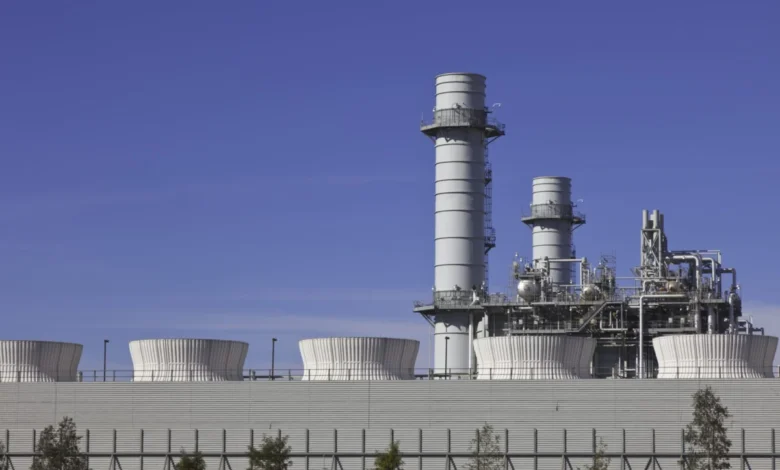
The rapid proliferation of artificial intelligence has triggered an unprecedented surge in electricity demand, compelling major technology companies to pivot toward natural gas as a primary energy source. While giants such as Microsoft and Meta have been aggressively securing fossil fuel-powered electricity to support their sprawling data center portfolios, a sobering new reality is emerging: the financial and logistical barriers to building these power plants are reaching critical levels. A recent report from BloombergNEF indicates that the cost to construct a combined cycle gas turbine (CCGT) power plant has spiked by 66% over the last two years, threatening to disrupt the infrastructure timelines of the world’s most valuable companies.
The Financial and Logistical Squeeze
In 2023, the benchmark cost for developing a new CCGT facility was under $1,500 per kilowatt of generating capacity. By the end of 2025, that figure had climbed to $2,157 per kilowatt. This dramatic inflationary trend is exacerbated by a secondary crisis: the supply chain for power generation equipment is effectively bottlenecked.
Gas turbines, which account for roughly 30% of the total capital expenditure for a new power plant, have seen their prices skyrocket by 195% compared to 2019 levels. This surge is driven by a global shortage of manufacturing capacity. The sophisticated engineering required to build these turbines does not allow for rapid scaling, and as tech companies rush to place orders, waitlists have extended into the early 2030s. Consequently, the time required to bring a new facility from planning to operation has increased by 23%, creating a significant disconnect between the urgent demand for AI compute power and the physical reality of grid expansion.
A Chronology of the Power Crunch
The trajectory of this energy crisis can be traced back to the post-pandemic acceleration of large language models.
- 2023: Tech companies maintain their traditional strategy, favoring grid-connected facilities bolstered by power purchase agreements (PPAs) for renewable energy sources like wind and solar.
- Early 2024: The sheer scale of generative AI deployment begins to outstrip existing grid capabilities. Utilities and tech firms begin to pivot, acknowledging that intermittent renewables alone cannot provide the "always-on" baseload power required by massive server clusters.
- Late 2024: The Trump administration issues guidance urging data center operators to "bring their own power," signaling a shift in regulatory expectations and placing the burden of generation squarely on private entities.
- 2025: Data center demand forecasts are revised upward, with projections indicating a 300% increase in electricity needs through 2035.
- 2026: BloombergNEF reports the 66% cost hike, highlighting that the "love affair" with natural gas has hit a significant economic roadblock.
The Scaling Problem: From Megawatts to Gigawatts
The nature of the data center industry is undergoing a fundamental structural change. Historically, data centers were modest, localized facilities. Today, the industry is trending toward hyperscale campuses that often exceed 100 megawatts. While only 10% of current facilities reach the 50-megawatt threshold, the industry is shifting toward a standard that doubles that capacity.
This scale is the primary driver for the projected increase in electricity consumption from 40 gigawatts today to 106 gigawatts by 2035. As tech companies attempt to satisfy this hunger, they are finding that the grid is not merely a service they can plug into, but a finite resource they are now competing for against residential and commercial ratepayers. This has resulted in a growing public backlash, as communities increasingly view large-scale data center projects as competitors for local utility resources, potentially driving up costs for average households.

Regulatory and Public Backlash
The tension between digital infrastructure and local power grids is no longer a niche industry issue; it has become a central point of civic contention. Utilities, in their effort to accommodate the massive load requirements of AI firms, have often passed the capital costs of grid upgrades and new generation plants to their broader customer base. This "socialization of costs"—where the general public subsidizes the infrastructure necessary for a private company’s proprietary AI model—has led to heightened local opposition.
Public hearings regarding new data center zoning and power permits have become increasingly adversarial. Residents are raising concerns not only about the cost of electricity but also about the environmental impact of local natural gas combustion, even as tech companies argue that these plants are necessary to stabilize the grid against the volatility of renewables.
The Diverging Strategies: The Google Alternative
While the industry at large appears tethered to the rising costs of natural gas, some players are seeking alternative pathways. Google, for instance, has recently signaled a shift in its energy playbook. Rather than relying exclusively on fossil fuel combustion, the company is investing in integrated systems that pair solar and wind with long-duration energy storage.
A notable component of this strategy is the use of iron-air batteries, such as those produced by Form Energy, which are capable of discharging electricity for up to 100 hours. This technology addresses the intermittency issue that has historically made renewables difficult to use as baseload power. Proponents of this approach point to the fact that, unlike gas turbines, the cost of solar photovoltaic panels and battery storage has continued to decline, potentially offering a more sustainable and economically predictable hedge against the volatility of the fossil fuel market.
Economic and Strategic Implications
The current predicament facing Microsoft, Meta, and their peers suggests that the "AI Gold Rush" is hitting the hard limits of physical infrastructure. The strategy of simply building more natural gas plants is proving to be a high-cost, high-risk endeavor, not only due to the 66% rise in construction costs but also because of the long-term political risk associated with being a primary driver of rising utility bills.
For investors and industry analysts, the coming decade will be a litmus test of whether the tech sector can innovate its way out of an energy crisis or whether the high cost of power will eventually act as a cooling mechanism for the rapid expansion of AI services. As equipment waitlists stretch into the next decade, the ability to secure energy—rather than just the ability to write code—may become the most important competitive advantage in the technology landscape.
Ultimately, the sector is at a crossroads. The reliance on natural gas represents a short-term solution to a long-term problem. If the current trends of price volatility and supply chain shortages persist, the industry may be forced to accelerate its investment in energy efficiency and alternative storage technologies much faster than originally anticipated. The era of cheap, readily available grid power is coming to a close, and the companies that successfully navigate this transition will be those that manage to decouple their growth from the rising costs of traditional, carbon-intensive infrastructure.
Related posts: